 Russian
  English
  Chinese
  German
  Portuguese
  Spanish
  French
  Arabic

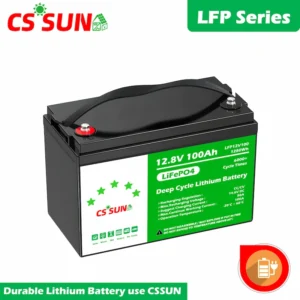
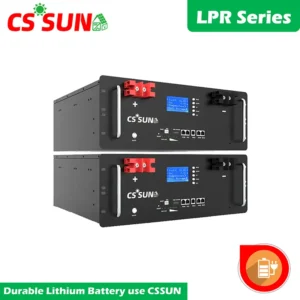
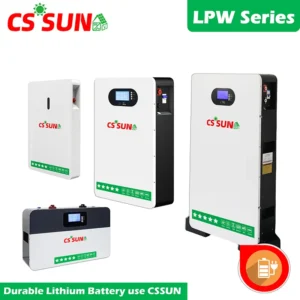
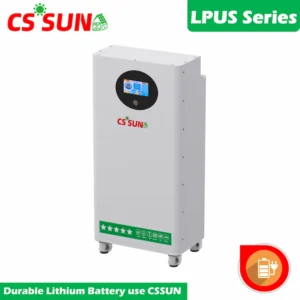
Replacing a lead-acid battery with LiFePO4 starts with a system check. A battery that fits the same compartment may still require different charger settings, current limits or protection arrangements. For distributors, installers and equipment buyers, these seven checks help define a suitable replacement before ordering.
1. Match the operating voltage range
Check the battery voltage against the equipment’s full DC input range, including charging voltage and low-voltage shutdown. A nominal voltage label alone does not establish compatibility. Record the existing battery arrangement, charger model and inverter or equipment model so the complete system can be reviewed.
2. Compare usable energy, not just amp-hours
Start with nominal energy: voltage multiplied by amp-hours gives watt-hours. For example, a 12.8V 100Ah battery stores a nominal 1,280Wh. Actual runtime depends on the permitted depth of discharge, load, temperature and conversion losses.
For an illustrative calculation, 1,280Wh multiplied by an assumed 80% usable fraction and 90% inverter efficiency gives about 922Wh at the AC output, or roughly 1.8 hours at a constant 500W load. This is a sizing example, not a performance guarantee for a CSSUN model. Use the selected battery’s specifications and the real load profile.
3. Review every charging source
Check the mains charger, solar controller and any alternator charging circuit. Use settings approved for the selected LiFePO4 battery. Lead-acid equalization or desulfation modes must not be applied unless the lithium battery manufacturer explicitly permits them. Confirm charge-current limits and whether BMS-controlled charge shutdown is required. Alternator systems may need a suitable current-limited DC-DC charger.
4. Size the BMS for continuous and starting loads
Battery capacity and discharge-current capability are different specifications. Compare the continuous current rating and permitted peak duration with the equipment’s steady load and startup demand. A pump or compressor may need substantially more power when starting. Include inverter losses and the lowest intended operating voltage in current calculations, and check how the system behaves when the BMS disconnects.
5. Check cold-weather charging requirements
Charging and discharging temperature limits can differ. Confirm the selected model’s charging range, low-temperature protection and any heating function. Do not assume that a battery capable of operating in cold weather can also accept charge at the same temperature. Heating operation, power demand and restart conditions should be documented for the installation.
6. Confirm series, parallel and communication support
Use only configurations permitted by the specific battery manufacturer. Confirm the maximum number of batteries, matching requirements and commissioning procedure. Do not assume a built-in BMS makes every battery suitable for series connection. Where inverter communication is required, verify the supported protocol, cable pinout and firmware combination; the presence of CAN or RS485 alone does not establish compatibility.
7. Review installation and after-sales requirements
Check dimensions, terminal positions, mounting requirements, enclosure suitability and access for maintenance. Have the installer verify cables, fuses and disconnect devices for the selected battery system. For commercial orders, also request the applicable model documentation, warranty terms and support process. Avoid transferring a certification or performance claim from one model to another.
What to send CSSUN for a replacement assessment
- Existing battery model, voltage, capacity and number of batteries.
- Charger, inverter or equipment model and available settings.
- Continuous load, startup load and target backup time.
- Installation temperature, available space and indoor or outdoor location.
- Required quantity, destination market and OEM requirements.
Explore the CSSUN LiFePO4 lead-acid replacement range, or contact CSSUN with your system details to discuss a suitable configuration.
This checklist supports product selection. Final settings and installation must follow the manuals for the selected battery and connected equipment.
Technical references
For examples of model-specific requirements, see Victron Energy’s Lithium Smart Battery installation manual и system design and BMS selection guide. Their product-specific settings are not CSSUN specifications.